Post-Military Education: The Benefits of Culinary School

Charlie Ruffolo • May 22, 2018


From Julia Child to John Besh, some of the most famous culinary names in the world have served in the United States military. Attending culinary school after your service is a great way to transition into the next stage of your life and career. The flexibility and timeframe of a culinary education means that you can begin pursuing your passion. Whether you are still in active-duty or a veteran, your military benefits can fund your education.


Associate of Occupational Studies in Culinary Arts Degree (Concentration: Advanced Culinary Arts)

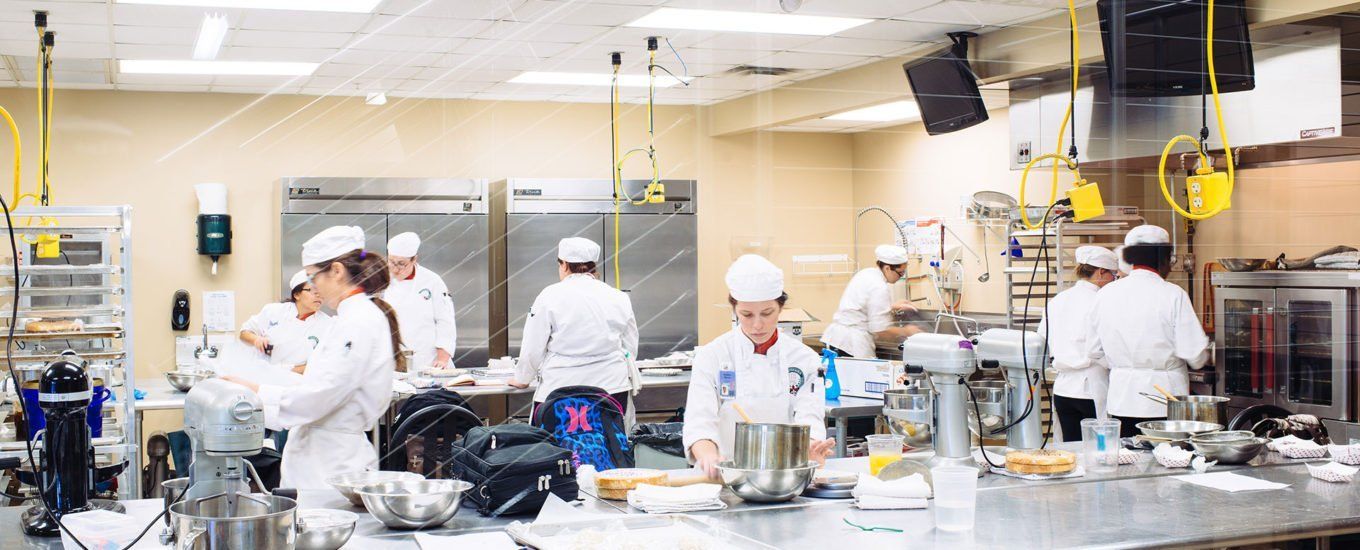
This degree program takes 16 months to complete, this includes holiday and semester breaks; meaning you can earn your degree, and still maintain over half of your GI benefits. The  Advanced Culinary Arts concentration  provides the skills, training, and knowledge to become a successful chef. While important topics like food safety, preparation, and restaurant production are covered; so are peripheral topics that professionals need to know, like accounting, entrepreneurship, and career management.


Associate of Occupational Studies in Culinary Arts Degree (Concentration: Advanced Baking and Pastry)

Like the Advanced Culinary Arts concentration, the  Baking and Pastry concentration  can also be completed in 16 months. This degree program covers a lot of the same essential courses as the culinary arts degree, with a focus on baking and pastry skills. Confections, centerpiece display, dessert production, and more are all elements of this program.


If you’ve been discharged or are nearing the end of your active-duty status, and have a passion for cooking, the enrollment experts at Louisiana Culinary Institute are here to help you take advantage of the education benefits that you’ve earned serving our country.
 

APPLY TO LCI
By Charlie Ruffolo March 25, 2026
Some people know from childhood exactly where they're headed. Ben Messina took a different route. He started college as a music major, took a gap year to find his footing, and leaned on his brother's encouragement before landing exactly where he was always meant to be: a professional kitchen . Now a senior in the Savory program at Louisiana Culinary Institute (LCI) in Baton Rouge, Ben is weeks away from graduating in May 2026. He arrived at LCI with a love of cooking and a family connection to food. He's leaving with a world-class culinary foundation, a mentor who pushed him to be his best, and a dream of opening multiple restaurants of his own one day. His story is proof that the path to a culinary career doesn't have to be a straight line. Is It Too Late to Change Careers and Go to Culinary School? For Ben, food has always been part of the family fabric. Growing up in Baton Rouge, he spent time in the kitchen with his grandmother, learning to make snickerdoodles as a kid. Those early memories planted a seed. But Ben initially followed a different passion. He'd played trumpet and piano since a young age, so he enrolled at Southeastern Louisiana University to study music. It wasn't long before the questions started creeping in: "What am I actually going to do with a music degree?" He took a gap year to figure it out. And the answer, when it came, was simple: go back to his other love. Cooking. His brother, who owns a food truck, had been encouraging him to consider culinary school. More specifically, he encouraged Ben to look at LCI. And then, without warning, he signed him up for a campus tour. 
culinary leadership skills
By Charlie Ruffolo February 26, 2026
Being a great cook isn’t enough. Explore how LCI develops culinary leadership skills that prepare students for real-world kitchen management and career growth.
More Posts