Inside a Real Culinary Education: What Louisiana Culinary Institute Teaches Beyond Recipes
Cooking competition shows make the culinary world look cutthroat. Timers are ticking, chefs are eliminated, and only one person “wins.” It’s entertaining, but it’s not the full story.
In real kitchens across Louisiana and beyond, success doesn’t come from working alone. It comes from teams that communicate, adapt, and support one another under pressure. That’s a lesson students at Louisiana Culinary Institute (LCI) learn early, and one that consistently shows up in student spotlights, alumni stories, and professional kitchens throughout the state.
Why does the culinary industry value teamwork so highly?
Professional kitchens are fast-paced, high-pressure environments. Orders overlap, timing matters, and one missed step can affect an entire service. No single chef, no matter how skilled, can execute a successful service alone.
In Louisiana’s food culture, hospitality is inseparable from cooking. Kitchens here are built on shared responsibility, pride in service, and respect for the people working beside you. Teamwork is not optional; it’s how kitchens function.
How do real kitchens function more like teams than competitions?
A professional kitchen operates as a coordinated system. Prep cooks, line chefs, bakers, and expeditors all depend on one another to deliver consistent, high-quality food.
This is why teamwork comes up so often in LCI student spotlights. Students quickly realize that even strong individual skills fall apart without communication and trust. When one station struggles, the entire line feels it. When the team works together, service runs smoothly, even during the rush.
How does LCI’s commercial kitchen prepare students for real-world teamwork?
Louisiana Culinary Institute’s purpose is to educate students to become highly trained professionals in food service operations, and that commitment shows in its facilities.
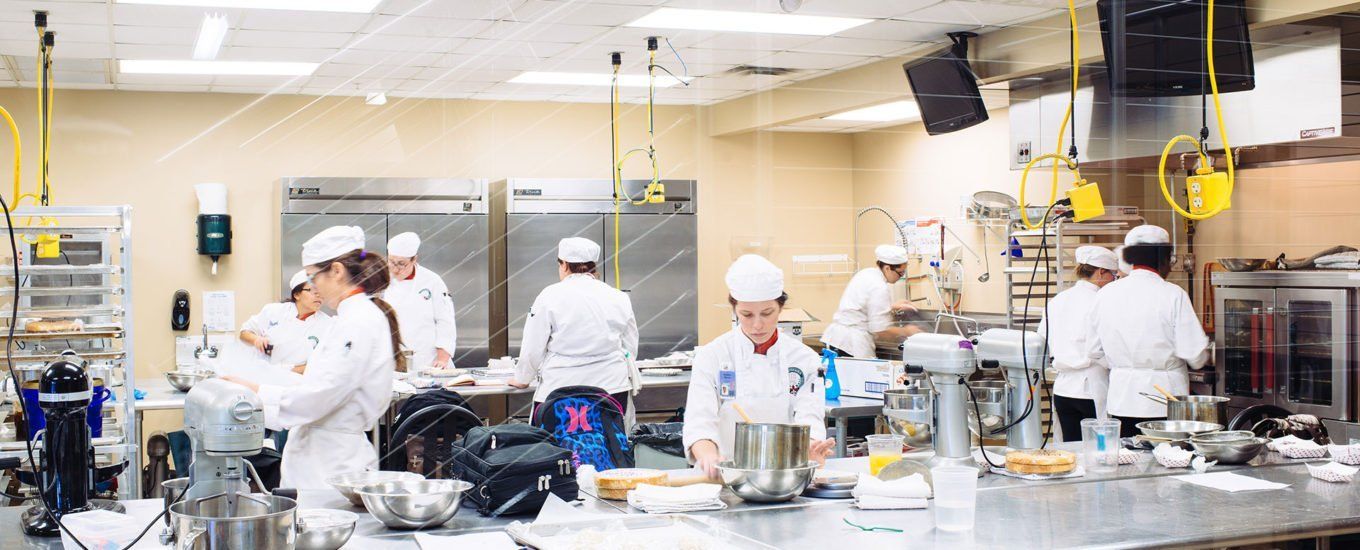
LCI provides full commercial kitchens designed to mirror the environments graduates will work in, not scaled-down classrooms. Students train using professional equipment, real workflows, and industry-standard expectations. This immersion forces collaboration from day one, just like in a real restaurant.
You’re not learning teamwork in theory. You’re practicing it in the same type of kitchen you’ll step into after graduation.
Why does serving lunch to classmates matter in culinary training?
At LCI, students don’t just cook for grades; they cook for people.
By serving lunch to classmates daily, students experience what real service feels like: timing constraints, quality control, coordination between stations, and accountability to diners. If a dish is late or inconsistent, it’s immediately obvious.
This real-world service model reinforces teamwork in a way simulations never could. Students learn to communicate clearly, support each other under pressure, and take pride in delivering a complete dining experience, skills employers expect from day one.
Is competition still important in culinary education?
Yes, but only when it’s framed correctly.
Healthy competition pushes students to refine technique, improve speed, and raise standards. At LCI, competition is positioned as personal growth, not ego. Students are encouraged to challenge themselves while still helping classmates succeed.
This balance creates chefs who are confident in their abilities and respected by their peers, an essential combination in professional kitchens.
How does collaboration help culinary students grow faster?
Collaboration exposes students to new techniques, perspectives, and problem-solving approaches. It builds adaptability, one of the most valuable skills in food service.
Many LCI students highlight this hands-on, team-based learning in their stories. As one student explained:
“I knew I needed a school where I could learn in the kitchen with real chefs and other students. LCI was the perfect fit. You learn by doing, not just by watching.”
— Kayla Taplin, LCI Student
That “learn by doing” environment, side-by-side with peers, is where confidence and resilience are built.
What role does mentorship play in turning pressure into progress?
Chef instructors at LCI model how professional kitchens actually function. They guide students through challenges while emphasizing respect, communication, and shared responsibility.
Mentorship helps students understand when to lead, when to listen, and how to give feedback that strengthens the team. This approach transforms competition into opportunity and prepares students for leadership roles later in their careers.
Why does teamwork start in culinary school, not after graduation?
Culinary school sets habits that follow students into their careers. Group prep, shared stations, and live service teach accountability from the start.
LCI students learn that showing up prepared, supporting teammates, and respecting every role are just as important as knife skills or plating. These are the qualities Louisiana restaurants, hotels, and catering operations consistently look for when hiring.
Can chefs really succeed alone in today’s culinary industry?
The most successful kitchens understand that competition and collaboration go hand in hand. Competition pushes chefs to improve. Collaboration makes excellence sustainable.
At Louisiana Culinary Institute, students learn this balance in real commercial kitchens, serving real guests, alongside real teammates. Because in the culinary world, especially in Louisiana, great food is created by great teams.